What Fuel Does a Jet Car Use? | WaterBoatCar
WaterBoatCar jetcars run on standard marine-grade gasoline — here's what fuel type to use and what to know about range and fuel capacity.
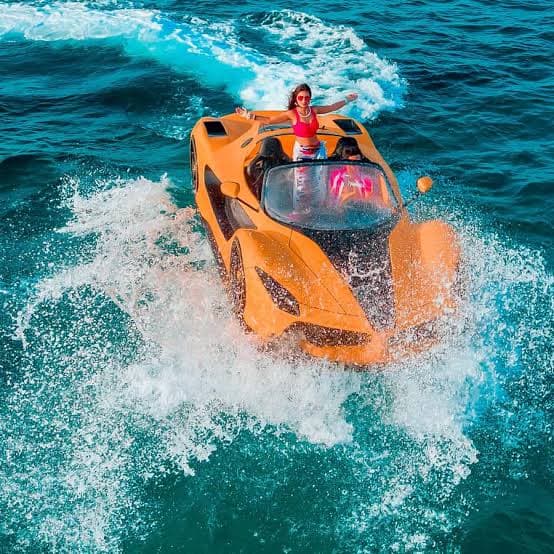
Jet car fuel type is a practical, ownership-relevant question — and the answer is a straightforward one: WaterBoatCar models run on standard marine-grade gasoline, the same fuel type used by the large majority of personal watercraft and powerboats equipped with high-output jet propulsion engines. No exotic fuel, no special additive, no diesel. Just the right octane rating, from any full-service marina fuel dock.
The fuel type in plain terms
Every WaterBoatCar model uses a high-output marine jet propulsion engine. These engines run on gasoline — specifically, marine-grade gasoline at the octane rating specified in your model's owner documentation. The exact octane recommendation can vary slightly depending on how your specific model's engine is tuned, so it is worth checking the documentation for your build rather than assuming a single number applies across the entire lineup.
As with any marine engine, using the correct octane rating matters for both performance and long-term engine health. Under-octane fuel can cause pre-ignition (knock) in high-output engines; over-octane fuel is simply unnecessary expense. The right number is in your documentation — use it.
Marine fuel vs automotive fuel: what you need to know
This is a distinction that matters more than most new boat owners expect. A few key differences:
| Factor | Marine fuel | Automotive fuel |
|---|---|---|
| Ethanol content | Often lower-ethanol or ethanol-free options available at marine docks | Often E10 (10% ethanol) by default at road stations |
| Ethanol and storage | Ethanol attracts moisture and degrades faster in a marine fuel system | Less of a concern in a car engine that runs frequently |
| Vapour pressure | Marine fuel is often formulated for lower volatility | Higher volatility acceptable in road vehicles |
| Octane availability | Higher-octane options usually available at marine fuel docks | Readily available at road stations |
| Where to buy | Marina fuel docks, full-service marinas | Road fuel stations |
The ethanol point deserves special attention for jetcar owners. Ethanol-blended fuels, common at many road fuel stations, degrade more quickly in a marine fuel system than in a car — particularly during extended storage. If you will be using a road fuel station rather than a marina dock, be aware of the ethanol content and factor in fuel stabiliser accordingly.
Ethanol-blended fuel and marine storage: what to do
If your jetcar will sit unused for weeks or months — over a winter season, or simply during a busy period when you are not getting out on the water — using a fuel stabiliser designed specifically for marine engines is a smart, low-cost preventative step. This is relevant regardless of where you bought your fuel, but particularly important if you have used ethanol-blended fuel.
A quality marine fuel stabiliser:
- Prevents ethanol-blended fuel from absorbing moisture and degrading
- Protects fuel system components from the corrosive effects of ethanol during storage
- Keeps the fuel usable for significantly longer than untreated fuel
- Costs very little relative to the fuel system damage it prevents
This is standard practice for any boat or jet ski stored for extended periods. It is not unique to WaterBoatCar models — it is just good marine fuel management.
Fuel capacity and real-world range by model
Fuel capacity varies across the WaterBoatCar lineup, reflecting the different hull sizes of the five models. As a general pattern, larger models carry more fuel, which extends range even as their greater weight partially offsets that advantage.
Real-world range depends heavily on how you use the throttle:
| Throttle usage | Effect on fuel consumption | Effect on range |
|---|---|---|
| Full throttle, extended periods | Very high fuel consumption | Shortest range |
| Active riding with varied throttle | Moderate-high consumption | Moderate range |
| Steady cruise at moderate speed | Moderate consumption | Good range |
| Relaxed, low-speed operation | Lower consumption | Maximum range |
This is the same relationship found in any high-performance boat or car: the harder you push it, the faster it burns fuel. Our team provides exact fuel capacity and estimated range figures specific to your model as part of the quote and delivery process, so you can plan outings with realistic expectations.
Fueling your jetcar: practical guidance
Whether you are fueling at a marina dock or using a portable fuel container, a few good habits protect the engine and fuel system:
Follow your model's documentation. The fueling guidance in your owner documentation is specific to your engine's requirements — follow it rather than applying automotive intuition.
Do not overfill. Leave the appropriate amount of space in the tank for fuel expansion, particularly in hot weather. Overfilling can cause fuel to be expelled through the vent system and creates unnecessary fire risk.
Use marina fuel docks when available. Marina docks typically offer lower-ethanol or ethanol-free marine fuel, which is preferable to road station fuel for storage-sensitive marine applications.
Add stabiliser before storage. Any time your jetcar will sit unused for more than a few weeks, add a marine fuel stabiliser before storing it. This is the single easiest preventative maintenance step for the fuel system.
Inspect the fuel system as part of regular servicing. Marine fuel systems benefit from periodic inspection — particularly hoses, connections, and filter elements — as part of the routine service schedule provided with your delivery.
Planning longer outings: fuel logistics
If you are planning a full day on the water or a multi-day trip, factoring fuel into your logistics plan the same way you would with any boat is sensible practice. Know your model's real-world range at your typical cruising speed, identify marina fuel stops along your route if needed, and build a modest buffer into your fuel planning rather than arriving at the last dock on fumes.
For regular day outings from a home base, most buyers find their jetcar's fuel capacity comfortably covers typical use patterns with a single fill at the start or end of the day.
Pros and cons of the fuel setup for WaterBoatCar models
Pros
- Standard marine-grade gasoline — no specialist fuel or additives required beyond good practice
- Available at any full-service marina fuel dock
- Same fuel type familiar to anyone who has owned a premium jet ski or powerboat
- High fuel capacity on larger models extends practical range meaningfully
Cons
- Ethanol-blended road station fuel requires extra care if used during storage periods
- High-output engine consumption at full throttle is meaningful — spirited days on the water will burn through fuel
- Correct octane rating matters more in a high-output marine engine than in a typical economy road vehicle
Comparing fuel needs across the WaterBoatCar lineup
| Model | Hull size | Relative fuel capacity | Typical use case |
|---|---|---|---|
| Model FLF (Ferrari) | Smaller | Lower | Two-passenger agility and speed |
| Model LA (Lamborghini) | Smaller | Lower | Two-passenger agility and speed |
| Model RR (Rolls-Royce) | Mid-large | Moderate | Six-passenger luxury cruising |
| Model B (Bugatti) | Mid-large | Moderate | 2–4 passenger performance |
| Model MG (Mercedes G-Class) | Largest | Higher | 4–6 passenger enclosed-cabin comfort |
Exact figures for your model are confirmed during the quote and delivery process. Use this table as a directional guide rather than a specification sheet.
What your delivery documentation includes
Every WaterBoatCar delivery includes a comprehensive owner documentation package that covers:
- The correct fuel type and octane rating for your specific model
- Fueling procedure and tank capacity
- Recommended fuel stabiliser products for marine storage
- Fuel system inspection intervals as part of the service schedule
- Guidance on where to source appropriate fuel in your area
You will not need to research these details independently — they are provided clearly as part of delivery, along with our team's guidance for any specific questions about your model's fuel requirements.
Fuel management habits that experienced marine operators develop
The gap between how road vehicle owners and experienced marine operators think about fuel is worth closing for any buyer new to powered watercraft. Road vehicles are refueled frequently and used constantly, which means fuel rarely sits long enough to cause problems. Marine vessels, particularly those with seasonal or occasional use patterns, have a fundamentally different relationship with the fuel in their tank.
Fill before storage, not after. A common first-time boat owner mistake is storing a vessel with a near-empty tank to avoid carrying "wasted" fuel. The reality is that an empty or near-empty tank contains more air — and therefore more moisture — than a full one. A full tank with stabiliser added is the better storage configuration.
Know your marina fuel options. Not all marina docks offer the same fuel. Some offer premium non-ethanol marine fuel; others offer standard blended fuel. If your model specifies a higher octane rating, confirm availability at your primary marina before you need it, so you are not improvising on the water.
Track fuel consumption against usage patterns. After a few outings you will develop a practical sense of how your model's consumption varies between relaxed cruising and spirited running. This makes range planning predictably accurate rather than a rough estimate.
Use the same brands of stabiliser consistently. There is no meaningful advantage to switching between marine fuel stabiliser products — consistency and regularity matter more than brand selection. Choose a quality marine stabiliser and use it consistently whenever storage periods are anticipated.
Fueling at sea: practical awareness for longer outings
If you are planning outings that go beyond the comfortable single-tank range of your model, some practical awareness about fueling logistics on the water is useful:
Plan refueling stops before you go. Identify marina fuel docks along your intended route rather than discovering mid-trip that the next accessible fuel is further than anticipated. Marine charts, fuel-finder apps, and local marina directories all help.
Always approach a marina fuel dock with more fuel than you think you need. Marine fuel docks can be busier than expected, temporarily unavailable, or at a depth that requires caution. Arriving with a comfortable buffer rather than running close to empty is simply good practice.
Carry a verified fuel range expectation for your model and throttle habits. Real-world range at 80% throttle is meaningfully different from real-world range at 50% throttle. Knowing your number for your typical riding style makes the difference between comfortable range awareness and uncomfortable uncertainty.
Environmental considerations around marine fueling
Modern marine engines are considerably cleaner than older designs, and responsible fueling habits reduce both environmental impact and maintenance requirements:
Avoid spills at the fuel dock. Use the absorbent pads available at most marine fuel docks and fill carefully rather than to the absolute brim to prevent fuel expansion overflow. Fuel in the water is an environmental problem and a legal issue in most jurisdictions.
Follow local regulations on fuel tank venting. Some areas have specific rules about when and where powered vessels may idle near fuel docks. Be aware of local marina rules.
Use ethanol-free marine fuel where available. Beyond the storage benefit, ethanol-free fuel has a lower environmental impact from spill events than ethanol-blended fuel, because it degrades differently in water.
These habits are standard among experienced marine operators and expected at full-service marinas. They are worth noting here because first-time marine owners are not always aware of them, and they make a real difference to both the experience and the environment.
Understanding your fuel gauge: marine vs road behaviour
If you are coming from a road vehicle background, the behaviour of a marine fuel gauge is worth a brief note. Marine fuel gauges are less precise than modern automotive gauges — they are mechanical float-type instruments that reflect tank level approximately rather than with exact precision. This is normal and standard across virtually all recreational marine vessels.
The practical implication: do not rely on a marine fuel gauge reading with the same confidence you would a car's fuel gauge. Use it as a directional indicator and cross-reference it with your knowledge of how long you have been running and at what throttle level. Experienced marine operators develop this habit automatically; first-time owners learn it quickly after the first time the gauge and their internal estimate diverge.
Final thoughts
Fueling a WaterBoatCar jetcar follows standard marine practice: the right octane-rated gasoline for your specific model, sensible use of marine fuel stabiliser during any extended storage period, and realistic range planning based on how you actually use the throttle. None of this is complicated or unusual — it is the same discipline any premium jet ski or high-performance powerboat requires. Our model-specific documentation, provided with every delivery, covers every fuel-related detail you need so you can focus on the water rather than the logistics.
Frequently Asked Questions
What fuel does a jet car use?
WaterBoatCar models run on standard marine-grade gasoline with the octane rating specified in your model's owner documentation. This is the same fuel type used by the large majority of personal watercraft and high-performance jet boats.
Do all five models require the same octane rating?
Not necessarily — engine tuning can vary slightly across the lineup. Check the specific documentation for your model rather than assuming a single number applies universally.
Can I use regular automotive gasoline?
Standard gasoline of the correct octane rating is generally what is used, but always follow the specific fueling guidance provided with your model rather than assuming automotive practices transfer directly to a marine engine.
How often should I use fuel stabilizer?
Any time the vessel will sit unused for an extended period — a few weeks or more, and especially over a full off-season if you are in a climate with seasonal storage. Using a marine fuel stabilizer is a smart, low-cost precaution.
Does the Model MG have a larger fuel capacity than the other models?
Fuel capacity varies by model, reflecting differences in hull size. The larger Model MG generally carries a different fuel capacity than the lighter models — our team provides exact figures for your specific model as part of the quote and delivery process.
What is a realistic range estimate for a day on the water?
Range depends heavily on your cruising speed and throttle habits. Our team provides model-specific range estimates as part of delivery documentation so you can plan outings realistically.
Explore the models
Every WaterBoatCar jetcar is hand-finished to order. Tap a model to see specifications, gallery and pricing.
 $98,000
WBC Model MG
The definitive off-road legend now commands the open sea. Engineered for performance, designed for presence, and crafted to carry up to six in uncompromising luxury.
 $84,000
WBC Model RR
Crafted for those who refuse to arrive unnoticed. A presence worthy of royalty. A statement beyond status.
 $82,000
WBC Model LA
The pinnacle of super sports performance — now reborn on water. Where Italian passion fuels pure speed.
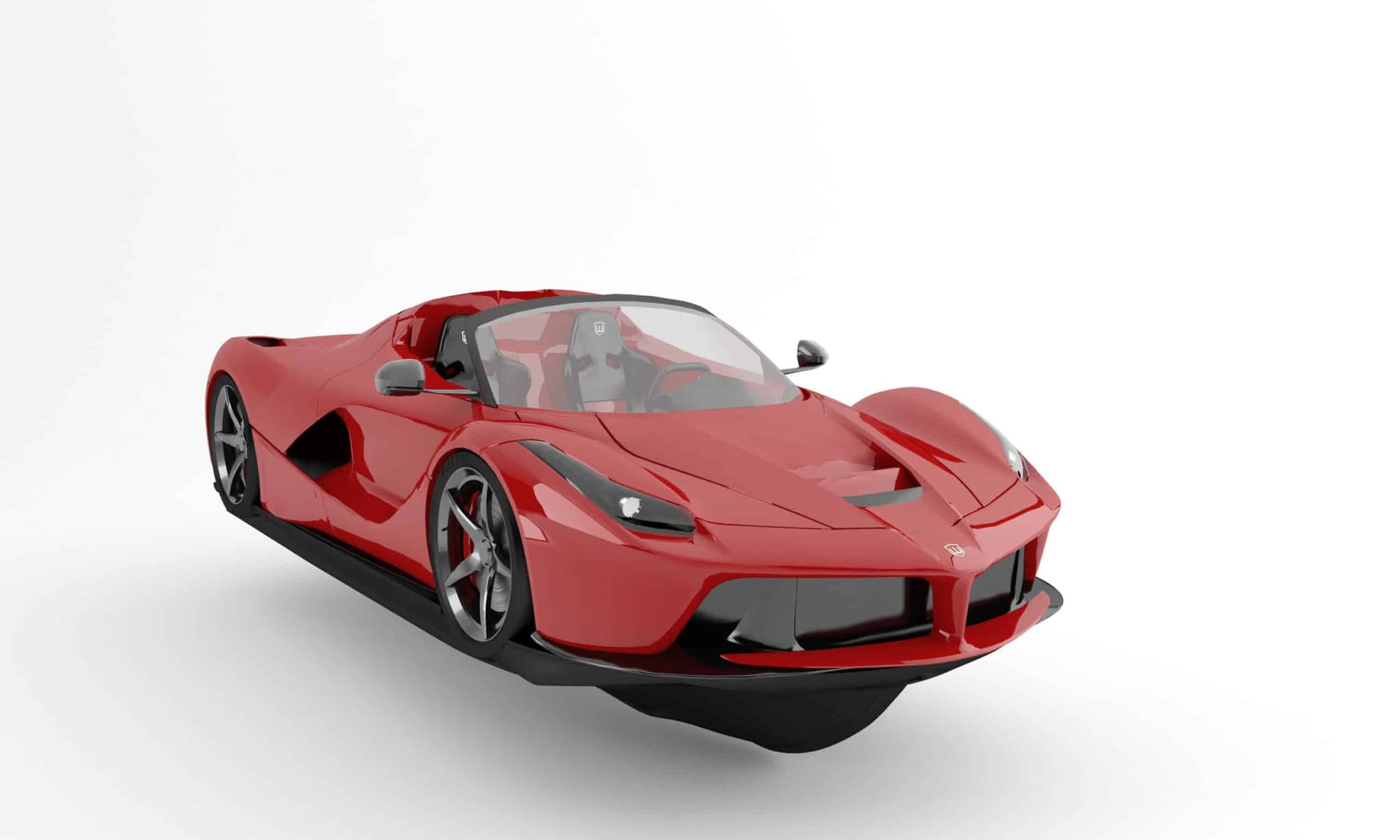 $82,000
WBC Model FLF
Unmatched speed. Now unleashed on water. Driven by Italian passion, engineered for pure performance.
 $90,000
WBC Model B
The ultimate expression of performance. When only the absolute best will do, this machine delivers beyond limits.
Keep reading
Related guides that answer the next questions most buyers ask.
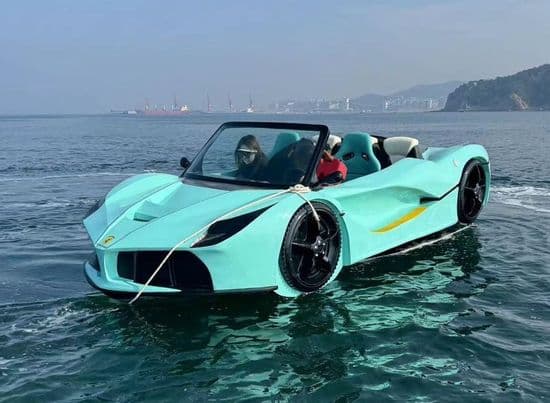
Jetcar Maintenance Costs | WaterBoatCar
Owning a WaterBoatCar jetcar involves marine maintenance costs similar to any high-performance personal watercraft — here's what to budget for.
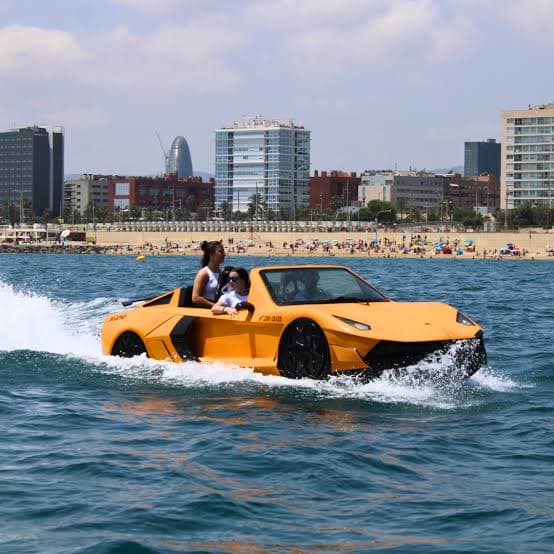
How Do Jet Cars Work? Jet Propulsion Explained
WaterBoatCar jetcars use marine jet propulsion, not propellers — here's how the technology actually moves you across the water.
How Fast Do Jet Cars Go? Top Speed by Model
WaterBoatCar jetcars deliver supercar-level performance on water — here's what top speed looks like for each model and what factors determine it.
Jetcar Horsepower Guide | WaterBoatCar
Compare horsepower across the WaterBoatCar luxury jetcar lineup and learn how engine output affects speed, handling, and on-water performance.
Where Should You Keep Your Jet Car? | WaterBoatCar
Compare trailer, marina, and indoor storage options for your jetcar, with practical guidance for climate, access, and maintenance.
Ready to configure your jetcar?
Choose your model, colours, interior and branding, then submit your build for a confirmed quote and production timeline.