Are Jet Cars Street Legal? | WaterBoatCar
Understand jetcar classification, waterway rules, registration, licensing, and ownership requirements before your first outing.
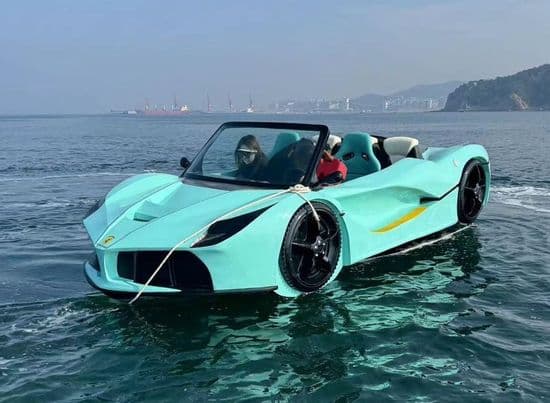
"Are jet cars street legal?" is one of the most common questions buyers ask before their first WaterBoatCar purchase, and the honest answer is that the question itself is built on a misunderstanding. "Street legal" is a road-vehicle concept — it describes whether a car meets the safety, emissions, and registration standards required to drive on public roads. A WaterBoatCar jetcar is a watercraft, not a car. It is never intended to touch a public road at all. So rather than asking whether it's street legal, the useful question is: what do you actually need to legally operate one on the water? That answer is short, well-documented, and much simpler than road-vehicle law — and this guide walks through all of it.
Why "street legal" doesn't apply
A WaterBoatCar jetcar is styled to look like a Bugatti, Ferrari, Lamborghini, Rolls-Royce, or Mercedes G-Class, but underneath that bodywork it is a jet-propelled vessel built entirely to operate on water. It draws water through a hull intake and pushes it out through a steerable nozzle to create thrust — there are no road wheels, no automotive transmission, and no reason for it ever to be on tarmac.
Because of that, none of the machinery of road-vehicle compliance applies. There is no DMV inspection, no emissions test, no license plate, no roadworthiness certificate, and no driver's license requirement. Regulators classify a machine by its function, not its appearance, and the function here is unambiguously that of a personal watercraft. If you want the fuller picture of how a jetcar differs from an actual automobile, our guide on the difference between jet cars and regular cars breaks it down in detail.
Road vehicle vs. watercraft: what actually applies
The quickest way to dissolve the confusion is to see the two categories side by side. A road vehicle and a watercraft answer to entirely different rulebooks, and a jetcar sits firmly in the watercraft column.
| Requirement | Road vehicle (car) | WaterBoatCar jetcar (watercraft) |
|---|---|---|
| Governing authority | DMV / DOT | State or national marine authority |
| Operator credential | Driver's license | Boater education card (where required) |
| Registration | License plate + title | Vessel registration + hull numbers |
| Safety inspection | Periodic roadworthiness check | Onboard safety equipment check |
| Emissions testing | Required in many areas | Not applicable |
| Insurance | Mandatory auto policy | Recommended marine policy |
| Where you operate | Public roads | Public waterways |
Read this way, the "street legal" question answers itself: none of the left-hand column applies, because the vessel never operates in the environment those rules were written for.
What you actually need to operate one on the water
Legal operation of a jetcar comes down to the same short checklist any boat or personal watercraft owner already follows:
- Vessel registration. Register with your state or country's marine or boating authority and display the registration numbers on the hull.
- Boater education, where required. Many jurisdictions require a one-time boating safety course and certificate rather than a recurring test.
- Required safety equipment. Typically a Coast Guard-approved life jacket for every passenger, a fire extinguisher, a sound-signaling device, and navigation lights for low-visibility operation.
- Awareness of local waterway rules. Speed limits, no-wake zones, and distance-from-shore rules that apply to every vessel.
None of this is unique to jetcars — it is the standard framework for owning any powered watercraft. For the state-specific version of this checklist, see are jet cars street legal in my state, and for where you're actually allowed to run one, are jet cars legal everywhere covers waterway restrictions.
Why the confusion is so common
The "street legal" framing usually traces back to two things. First, the name: "jet car" makes people think of thrust-powered drag racers built for the strip — machines that genuinely can't meet federal road-safety standards and are the subject of endless online debate. That is a completely different machine from what WaterBoatCar builds. Second, the styling: because the bodywork is inspired by supercars, buyers instinctively apply car logic — emissions, DOT equipment, inspections — to something that is legally a boat. The styling is skin-deep from a regulatory standpoint. A related question we hear often, can you drive a jet car on the road, comes from the same place, and the answer is the same: this is a vessel for water, full stop.
Pros and cons of the watercraft classification
Being classified as a watercraft rather than a road vehicle carries real advantages for an owner — along with a few things to simply plan for.
Pros
- No driver's license, DMV inspection, or emissions testing to maintain.
- Registration is typically simpler and cheaper than titling a comparable-value car.
- Boater education, where required, is usually a one-time course rather than a recurring exam.
- Access to a huge range of public waterways without road or route restrictions.
Cons / things to plan for
- You may need a boater safety certificate depending on your age and location.
- Required safety equipment must be carried on every outing.
- Registration must be renewed and re-filed if you relocate to another state or country.
- Local speed, no-wake, and distance-from-shore rules still apply on the water.
A real scenario
One buyer preparing to take delivery of a Ferrari-inspired jetcar called us convinced he'd need some kind of special road permit because of the car-styled design — he'd read forum threads about jet dragsters tangling with the DMV and assumed the same applied to him. Once we explained that his jetcar is titled and registered exactly like any new boat, the worry evaporated. He completed his state's standard boater education requirement, registered the vessel, and was on the water within a couple of weeks of delivery. His experience is the norm: nearly every buyer who arrives anxious about "street legal" red tape discovers the real process is refreshingly ordinary.
International buyers: the same logic applies globally
The "street legal" misconception is not limited to US buyers. Internationally, the same core principle holds: a WaterBoatCar jetcar is a watercraft governed by maritime and recreational vessel law, not road traffic legislation. The specific agency you register with and the boating safety requirements that apply will differ by country — the UK's Maritime and Coastguard Agency, Transport Canada, Australia's state-level Marine Safety authorities, and so on — but in every case the process follows the vessel registration pathway rather than the road vehicle pathway.
Most countries with well-developed recreational boating infrastructure have a streamlined registration process for personal watercraft. The requirements typically cover the same ground as the US checklist: hull identification, registration number display, mandatory safety equipment, and compliance with local waterway rules. If you are purchasing from outside the United States, our team will provide country-specific registration guidance as part of your onboarding, so you are not left to navigate an unfamiliar system unassisted.
What about transporting the jetcar on a trailer?
One area where road rules genuinely do apply is trailering — getting your jetcar from a storage location to a boat ramp or marina on a road-going trailer. The trailer itself is a road vehicle subject to standard automotive regulation: registration, brake lights, load securing, and towing capacity limits for your tow vehicle. The jetcar riding on that trailer is cargo, not a road vehicle, just as a boat on a trailer is cargo rather than a car.
This distinction matters because some buyers arrive wondering whether they need a special permit to tow a vehicle that looks like a supercar down a public road. The answer is no — you need a properly registered trailer rated for the load and a tow vehicle with sufficient towing capacity. Neither the styling of the jetcar nor its horsepower rating changes anything about the trailer rules. Standard marine trailering regulations apply, and they are not unusual.
Depending on where you store the vessel relative to your launch point, trailering logistics can vary significantly. Buyers who store at a marina with launch access have a simpler setup than those transporting further distances. Our team is happy to advise on trailer specifications and towing requirements for your specific model and location during the quote process.
What insurance covers for a watercraft vs. a road vehicle
Because a jetcar is classified as a watercraft, marine insurance — not auto insurance — is the correct product to hold. This is not a minor bureaucratic distinction; auto insurance policies explicitly exclude watercraft operation, and marine insurers underwrite against the risk profile of a vessel, not a car.
A marine policy for a vessel in this category typically covers:
- Hull damage from collision, grounding, or environmental events.
- Liability for third-party property damage or personal injury caused during operation.
- Theft and vandalism, which matters particularly for trailered storage situations.
- Towing assistance on the water if the vessel becomes disabled.
Some comprehensive marine policies also cover the trailer separately or can be extended to do so — worth confirming with your insurer. Our jet car insurance guide covers in detail what marine coverage looks like for a vessel of this type and price, and what a sensible policy should include before you take delivery.
The practical upshot is that marine insurance requirements are what you need to understand, not auto insurance — and because they are simpler than comprehensive automotive coverage for a high-value vehicle, most buyers find the insurance setup less onerous than they initially anticipated.
How registration differs from titling a car
For buyers who have only ever titled road vehicles, the watercraft registration process can feel slightly unfamiliar — not because it is harder, but because it uses different terminology and flows through a different agency.
When you register a car, you receive a title (proof of ownership) and a license plate (permit to operate on public roads). The two are linked. When you register a vessel, you receive a certificate of number or similar registration document, and the registration numbers are displayed on the hull directly rather than on a separate plate. In many US states, vessel titles are also issued for watercraft above a certain length or value, functioning as proof of ownership much as an auto title does — but the processes run through the state's boating or natural resources authority rather than the DMV.
The Hull Identification Number (HIN) on a WaterBoatCar jetcar is the vessel's unique identifier, equivalent to a VIN on a car. When you register, the HIN is recorded against your registration and serves as the link between the vessel and its legal owner. This is also what lenders use as the asset identifier if you are financing through a marine loan.
None of this requires specialist expertise — the registration forms are designed for everyday owners, and our team will have walked you through the specific steps for your jurisdiction before delivery.
How our delivery process removes the guesswork
Because requirements shift by location, we treat legal setup as part of the handover rather than something we leave you to untangle. When you request a quote through the configurator, our team provides specific guidance on registration, licensing, and the safety equipment your jurisdiction expects — including which authority to file with and whether boater education applies to you. The goal is that there's never ambiguity between placing your order and your first time on the water.
The right question to ask
So instead of "is it street legal," the question worth asking is "what do I need to legally operate this on the water" — and that answer is straightforward, well-documented, and something we walk every buyer through personally. A WaterBoatCar jetcar delivers supercar presence in a machine that is, legally and practically, a personal watercraft. The classification is not a technicality to work around — it is simply the correct description of what the vessel is and how it operates. Explore the models below to see which design fits you, then start a build to get location-specific guidance included in your quote.
Frequently Asked Questions
Are WaterBoatCar jetcars street legal?
The question doesn't really apply — a jetcar is a watercraft, not a road vehicle, so it is never intended to be driven on a public road. Instead of street-legal requirements, what matters is registering and licensing it to operate on the water, which is a simpler and separate process.
Do I need a driver's license to own or operate a jetcar?
No. You need whatever boater education or safety certification your state or country requires for personal watercraft, not a driver's license. There is no separate 'jetcar' license because the vessel is classified like any other powered watercraft.
Why do people assume a jetcar would be street legal?
Mostly because of the name and the supercar-inspired styling. People associate 'jet car' with thrust-powered road dragsters, and the Bugatti, Ferrari, or Rolls-Royce-inspired bodywork looks like a car — but regulators classify a vessel by what it does, not what it resembles.
How is a jetcar registered if not as a car?
It is registered through your state or country's standard marine vessel registration process, the same way you would register any powerboat or personal watercraft, with hull identification numbers and displayed registration.
Does WaterBoatCar help with the legal setup?
Yes. Because requirements vary by location, our team provides guidance on registration, licensing, and required safety equipment for your specific area as part of the delivery and onboarding process, so there is no guesswork before your first outing.
Is a jetcar cheaper to register than a comparable car?
In most jurisdictions, watercraft registration is simpler and less costly than titling a car of similar value, and there is no emissions test or annual roadworthiness inspection to maintain — though marine insurance and standard safety equipment still apply.
Explore the models
Every WaterBoatCar jetcar is hand-finished to order. Tap a model to see specifications, gallery and pricing.
 $98,000
WBC Model MG
The definitive off-road legend now commands the open sea. Engineered for performance, designed for presence, and crafted to carry up to six in uncompromising luxury.
 $84,000
WBC Model RR
Crafted for those who refuse to arrive unnoticed. A presence worthy of royalty. A statement beyond status.
 $82,000
WBC Model LA
The pinnacle of super sports performance — now reborn on water. Where Italian passion fuels pure speed.
 $82,000
WBC Model FLF
Unmatched speed. Now unleashed on water. Driven by Italian passion, engineered for pure performance.
 $90,000
WBC Model B
The ultimate expression of performance. When only the absolute best will do, this machine delivers beyond limits.
Keep reading
Related guides that answer the next questions most buyers ask.
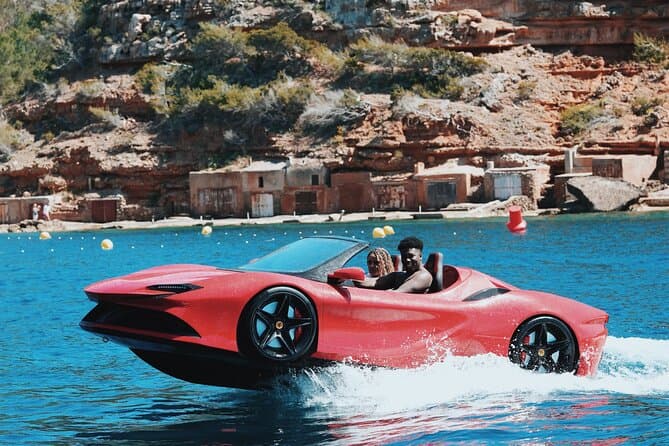
Are Jet Cars Legal in My State? | WaterBoatCar
WaterBoatCar jetcars are watercraft, not road vehicles — here's what that means for registration, licensing, and where you can legally operate one.
Are Jet Cars Legal Everywhere? | WaterBoatCar
Learn where WaterBoatCar jetcars can operate, which waterways may restrict use, and how to check local boating rules.
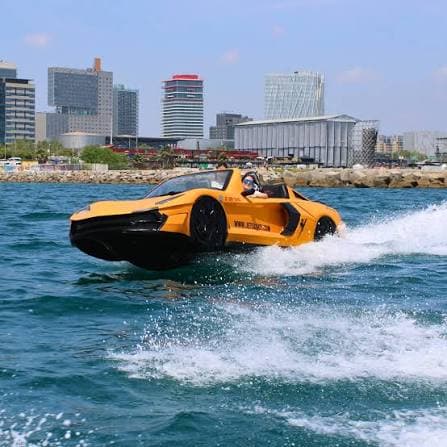
Can You Drive a Jet Car on Roads? | WaterBoatCar
WaterBoatCar jetcars are built exclusively for water — learn why they cannot be driven on roads and how to transport one safely by trailer.
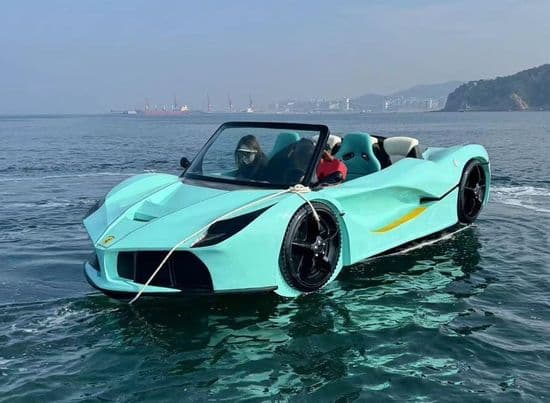
What's the Difference Between a Jet Car and a Regular Car?
A WaterBoatCar jetcar looks like a supercar but functions as a watercraft — here's exactly how it differs from a real car.
Ready to configure your jetcar?
Choose your model, colours, interior and branding, then submit your build for a confirmed quote and production timeline.