Can You Drive a Jet Car on Roads? | WaterBoatCar
WaterBoatCar jetcars are built exclusively for water — learn why they cannot be driven on roads and how to transport one safely by trailer.
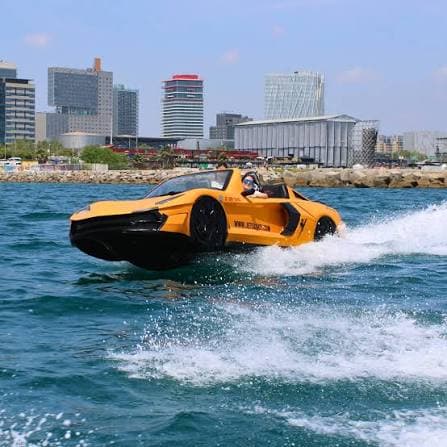
Can you drive a jet car on the road? The direct, unambiguous answer is no — a WaterBoatCar jetcar is built exclusively for water, and it is not designed, equipped, or intended to be driven on a public road under any circumstances. This is one of the most important things for a prospective buyer to understand clearly, given the highly convincing automotive styling that makes these vessels look so much like the supercars that inspired them.
What is physically missing for road use
The gap between what a WaterBoatCar jetcar looks like and what it actually is engineered to do is significant. Here is what is absent that would be required for any road vehicle:
No drivetrain to wheels. There is no engine connection to wheels making contact with pavement. The entire propulsion system is a marine jet drive — it draws in and expels water to generate thrust. There are no axles, no gearbox connected to wheels, and nothing that would turn against a road surface.
No road-legal safety equipment. Road vehicles require DOT-approved headlights, taillights, turn signals, brake lights, mirrors, road-rated tires, and crash safety systems including airbags and crumple zones. None of these exist on a WaterBoatCar jetcar, because none are relevant to its operating environment.
No emissions system for road standards. Road vehicle emissions are regulated under entirely different standards from marine engines. The engine in a WaterBoatCar jetcar meets marine emissions requirements, not automotive ones.
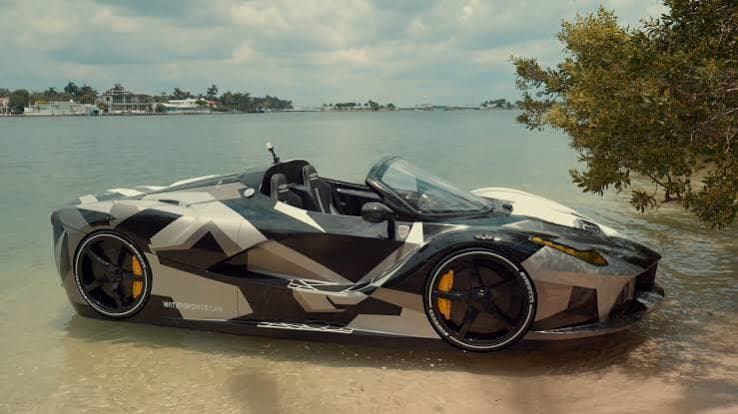
No road-rated tires. The vessel has no pneumatic road tires at all. What looks like wheels and rims from a styling perspective are design elements, not functional road-contact components.
This is not a matter of removing a few parts or adding a kit to make a jetcar road-capable. The entire vessel is engineered from the ground up for a completely different operating environment.
Jetcar vs amphibious car vs road car: the key differences
Understanding what a WaterBoatCar jetcar is requires being clear about what it is not:
| Feature | WaterBoatCar jetcar | True amphibious car | Road car |
|---|---|---|---|
| Operates on water | Yes — exclusively | Yes | No |
| Operates on road | No | Yes (limited) | Yes |
| Marine jet propulsion | Yes | Sometimes | No |
| Road-legal safety equipment | No | Yes | Yes |
| DOT/road registration | No | Yes | Yes |
| Vessel registration required | Yes | Yes (usually) | No |
| Transport method | Trailer | Self-driven | Self-driven |
| Primary purpose | Water performance | Dual road-water | Road use |
True amphibious vehicles — machines that genuinely transition between road and water operation — exist as a real and separate engineering category, built by different manufacturers with a fundamentally different design approach and a considerably more complex regulatory path. That is not what WaterBoatCar builds, and it is important to be direct about this so buyers know exactly what they are purchasing: a genuine, fully-functional luxury watercraft built purely for life on the water.
How you actually get it to the water
Since a WaterBoatCar jetcar cannot drive itself to the water, transport happens exactly the same way it does for any boat or personal watercraft: by trailer. This is entirely standard practice — the same process tens of millions of boat owners follow every day worldwide.
Our team provides specific guidance on trailer specifications suited to your model's weight and dimensions as part of the delivery process. Towing the trailer is done with a road-legal tow vehicle following standard trailer towing regulations in your area. The jetcar itself never touches the road surface.
At the boat ramp, the jetcar is launched into the water from the trailer using standard ramp procedures — the same as any boat. From that point, it operates entirely on its own marine jet propulsion system.
Once it is on the water
Once launched, this is where the experience delivers on every promise the styling makes. The marine jet propulsion system handles movement, steering, and stopping with the kind of responsive, agile performance that the supercar design language signals. High-output engines, immediate throttle response, precise nozzle-directed steering — the on-water experience is genuinely built to match the visual impact of the design.
Our how do jet cars work guide explains the jet propulsion mechanism in detail, including how steering and stopping work differently from both road cars and traditional propeller-driven boats.
Why we focused purely on water rather than amphibious capability
Building a genuinely dual-capable amphibious vehicle involves an entirely different engineering challenge — considerably more complex, expensive, and regulatory-heavy than building an exceptional dedicated watercraft. Our focus has been on delivering the best possible on-water experience: performance, comfort, styling, and safety. Compromising that experience to achieve road capability that most buyers would not actually use — given that trailer transport is already completely standard for personal watercraft — was not a trade-off worth making.
The result is a vessel that does one thing exceptionally well, rather than two things adequately.
The styling is real; the road use is not
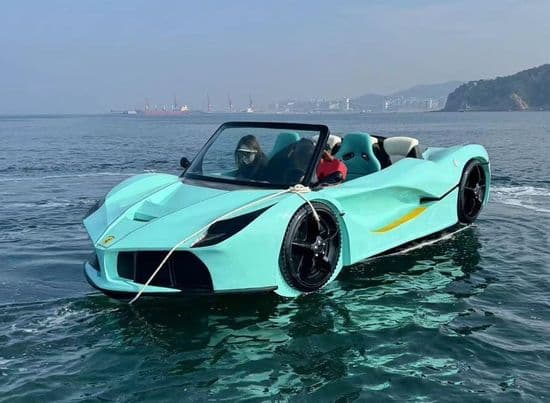
It is worth acknowledging the obvious: WaterBoatCar jetcars are designed to look exactly like the supercars that inspired them. The Bugatti Chiron grille, the Ferrari roofline, the Lamborghini body creases, the Rolls-Royce presence — these are not subtle visual nods. They are deliberate, fully-committed design interpretations applied to a marine hull.
That visual authenticity is precisely why the question "can you drive it on the road?" is so common. The honest answer — no, never, it is a watercraft — does not diminish what these vessels are. It simply locates them correctly: extraordinary on the water, transported to and from the water by trailer, and designed to turn heads at every marina they visit.
Pros and cons of a water-only vs amphibious design
Pros of water-only design
- Purpose-built engineering optimised entirely for on-water performance
- No compromises in hull design, weight, or powertrain for road use
- Simpler regulatory path — vessel registration only, no road-vehicle compliance
- Lower design cost reflects in a more accessible price point than true amphibious vehicles
- Cleaner, more authentic supercar-inspired styling without amphibious engineering compromises
Cons of water-only design
- Cannot self-propel to the water — requires a trailer and tow vehicle
- No road capability whatsoever, even in genuine emergencies
- An additional logistics step compared to launching from a permanent slip
For most buyers, the trailer step is genuinely not a meaningful limitation. Boat owners worldwide treat trailer transport as completely routine, and the access it provides — any boat ramp, any location — is often an advantage over a permanent slip.
What buyers need to arrange for road transport
To legally tow your jetcar to and from the water, you will need:
- A trailer appropriately rated for your model's weight (our team advises on this during delivery)
- A tow vehicle with sufficient towing capacity for the combined trailer and vessel weight
- Trailer lighting and registration in compliance with your state or country's regulations
- A valid driver's licence and towing experience appropriate to the combination weight
Our legal ownership guide covers what is required to legally operate the vessel on the water once it is launched, and our team handles the full registration and licensing walkthrough for every new owner as part of delivery.
How the trailer process actually works in practice
For buyers new to trailerable watercraft, the trailer process is worth demystifying — it is simpler than it sounds to people who have never done it, and it becomes completely routine within the first few outings.
The tow vehicle. You need a vehicle with sufficient towing capacity for the combined weight of the trailer and vessel. Your WaterBoatCar advisor will give you the relevant weight figures for your specific model so you can confirm your tow vehicle is appropriately rated. Most modern trucks, SUVs, and large crossovers are capable with a proper hitch.
The trailer. Our team provides guidance on appropriate trailer specifications for your model as part of the delivery process. Trailers need to be properly rated for the vessel weight and equipped with road-legal lighting and registration as required in your state.
The boat ramp. Boat ramps are standard infrastructure at marinas and public launch sites throughout the US and internationally. The process: back the trailer down the ramp to the water's edge, launch the vessel, secure the tow vehicle and trailer in the parking area, and operate the vessel on the water. Retrieval reverses the process. This takes longer to describe than to do — most experienced boat owners have it down to fifteen minutes or less.
The advantage of trailering. One underappreciated benefit of trailer transport is flexibility. You are not tied to a single marina — you can launch from any accessible ramp, explore different waterways, and transport the vessel to locations that a permanently slipped boat cannot easily reach. Many trailerable boat owners regard this mobility as a genuine advantage over a permanent slip, not a compromise.
How WaterBoatCar's design language works on the water
The supercar design vocabulary — the aggressive rooflines, the muscular body creases, the prominent grille structures translated to a bow — does not just look striking when you first see it in a marina. It looks striking at speed on the water, from every angle, in every light condition.
Watching a Ferrari-inspired WaterBoatCar at full throttle on blue water looks genuinely unlike anything else in marine design. The automotive styling translates surprisingly naturally to the water environment, partly because it draws on design languages already associated with speed and performance, and partly because the scale of a hull gives the design elements room to breathe in a way that a parked static display cannot fully convey.
This is worth mentioning because it connects directly to the road question. Buyers sometimes wonder whether a water-only vessel loses something by not being driveable on roads — as though road presence is part of what makes a supercar feel special. The honest answer: the visual impact of a WaterBoatCar on the water is, if anything, more commanding than it would be in traffic. There is no traffic to dilute it. Every marina, every waterway, every passing vessel notices.
What the water-only design philosophy enables
When you commit entirely to water as the operating environment, every design and engineering decision can be optimised for that single context. Hull shape, weight distribution, engine positioning, intake design — all of these are solved purely for on-water performance rather than requiring compromise to accommodate a road-going drivetrain.
The result is a vessel that is exceptional in its environment rather than adequate in two. This trade-off is worth being explicit about:
- A dedicated watercraft outperforms any amphibious vehicle on the water, because amphibious vehicles carry the weight and complexity of road capability that is largely irrelevant in the water
- The price of a genuinely capable, well-designed dedicated watercraft is meaningfully lower than the price of a genuinely capable amphibious vehicle
- The regulatory complexity of ownership is simpler — vessel registration only, not dual road-and-water certification
For most buyers, particularly those who already own road vehicles and simply want the best possible experience on the water, the pure-water-only design is not a limitation. It is the reason the vessel can be what it is.
Common questions from buyers considering their first trailerable vessel
Do I need special insurance for towing? Your standard auto insurance may or may not cover the towed vessel on the road — check your policy. Marine insurance covers the vessel while on the water. Some marine insurers also include road transit cover; others require an endorsement. Our insurance guide covers this in detail.
Can I practice at a quiet launch site before using a busy marina ramp? Absolutely — and many first-time trailerable boat owners do exactly this. Choosing a quieter ramp for your first few launches takes the pressure off the learning process.
What happens if my tow vehicle cannot handle the weight? Do not attempt to tow above your vehicle's rated capacity. Our team will give you the specific weight figures for your model, and if your current tow vehicle is underrated, upgrading or renting a more capable vehicle for launch days is the right approach.
Final thoughts
A WaterBoatCar jetcar is, deliberately and entirely, a water-only vessel — transported to and from the water by trailer like any boat, then delivering genuine high-performance marine engineering once launched. It is not an amphibious vehicle, and being honest about that distinction upfront means every buyer knows exactly what they are getting: one of the most visually striking watercraft on the market, engineered to perform as impressively as it looks — on the water, where it belongs.
Frequently Asked Questions
Can you drive a jet car on the road?
No — a WaterBoatCar jetcar is built exclusively for water. It has no wheels connected to a drivetrain, no road-legal lighting or safety equipment, and no road-rated tires. It is not designed, equipped, or intended for road use under any circumstances.
How do you get a jet car to the water if it cannot drive itself there?
By trailer — the same process used for any boat or personal watercraft. Our team provides guidance on appropriate trailer specifications for your specific model as part of the delivery process.
Is a WaterBoatCar an amphibious vehicle?
No — it is a dedicated watercraft, not an amphibious vehicle. True amphibious cars exist as a separate engineering category from different manufacturers. WaterBoatCar builds purely water-based vessels.
Do I need a special trailer for my specific model?
Trailer requirements vary by model weight and dimensions. Our team provides specific guidance for your chosen model as part of the delivery process.
Is it legal to trailer a jetcar on public roads?
Yes — trailering a watercraft using a properly rated, road-legal trailer and tow vehicle is completely standard and legal, the same as transporting any boat.
Can I briefly drive it on a beach or boat ramp?
No — it is designed exclusively for on-water operation. Launching and retrieving should happen via a proper boat ramp using standard trailer procedures, not by attempting to operate the vessel itself outside the water.
Explore the models
Every WaterBoatCar jetcar is hand-finished to order. Tap a model to see specifications, gallery and pricing.
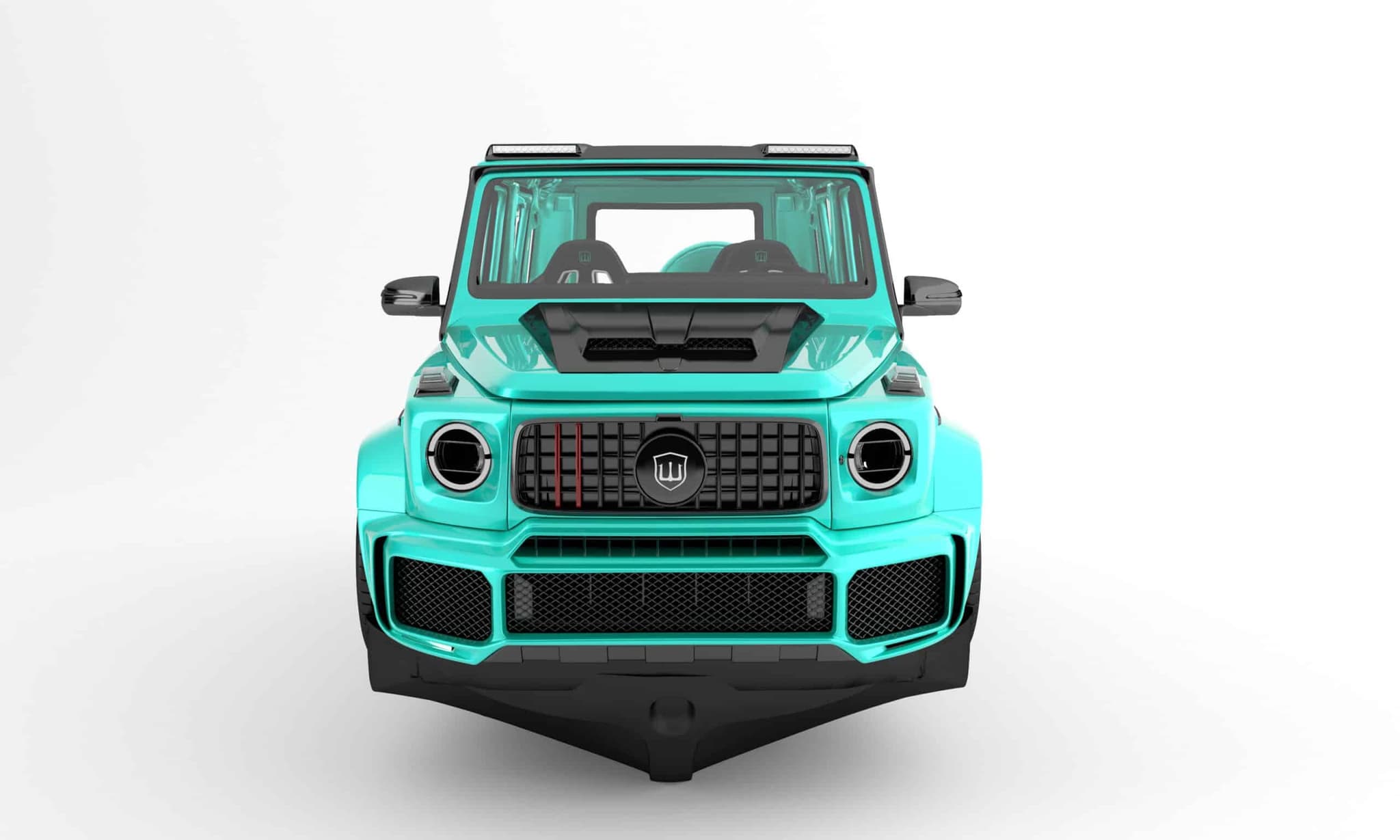 $98,000
WBC Model MG
The definitive off-road legend now commands the open sea. Engineered for performance, designed for presence, and crafted to carry up to six in uncompromising luxury.
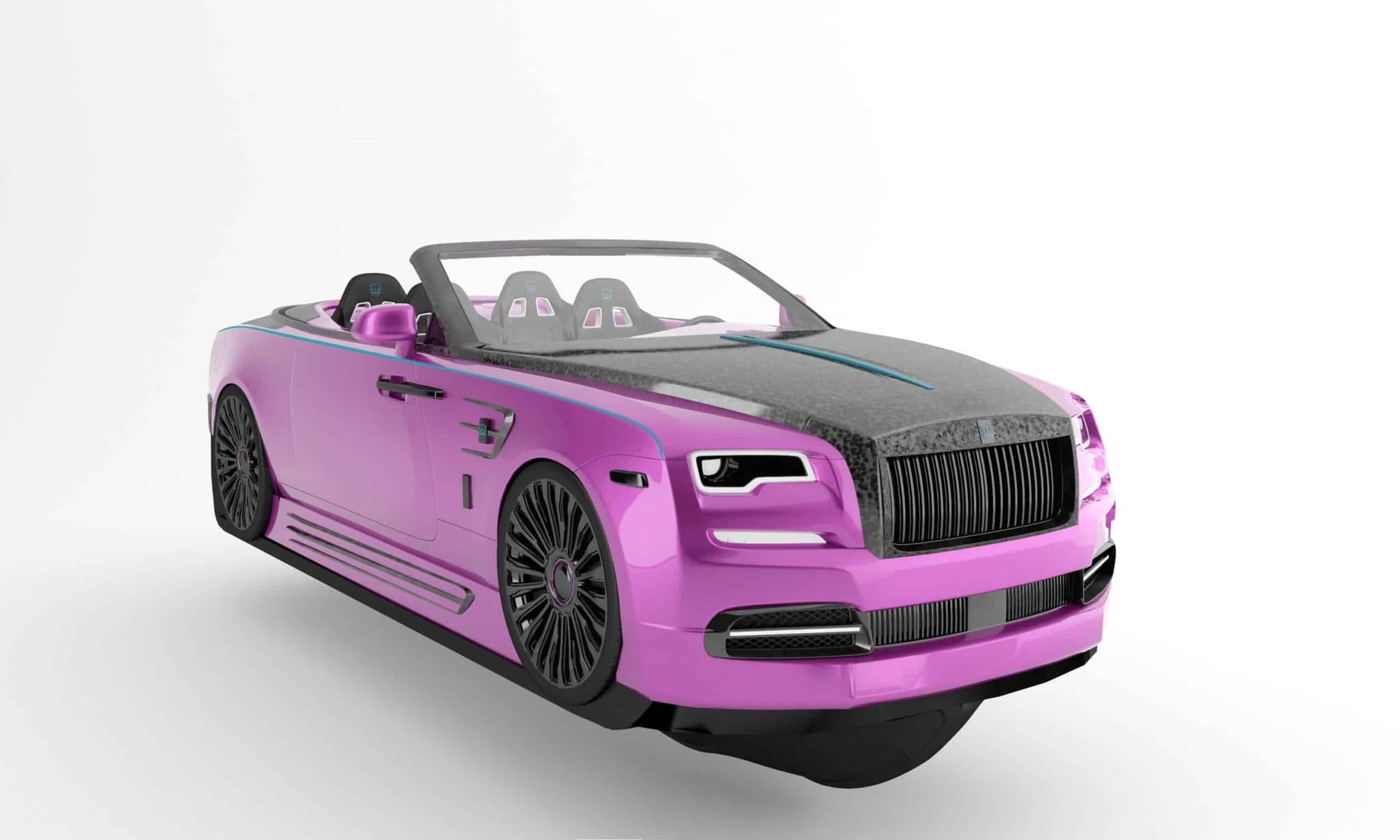 $84,000
WBC Model RR
Crafted for those who refuse to arrive unnoticed. A presence worthy of royalty. A statement beyond status.
 $82,000
WBC Model LA
The pinnacle of super sports performance — now reborn on water. Where Italian passion fuels pure speed.
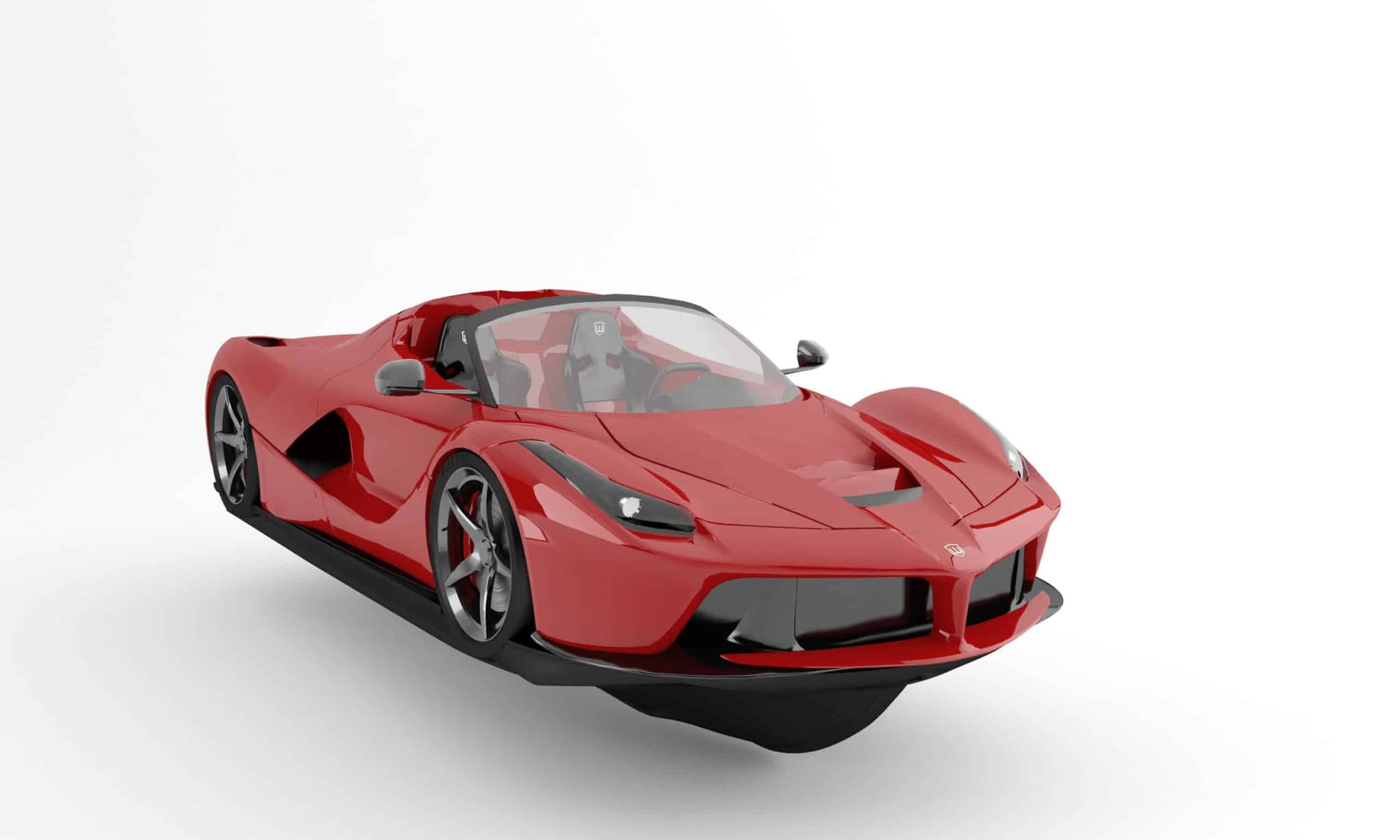 $82,000
WBC Model FLF
Unmatched speed. Now unleashed on water. Driven by Italian passion, engineered for pure performance.
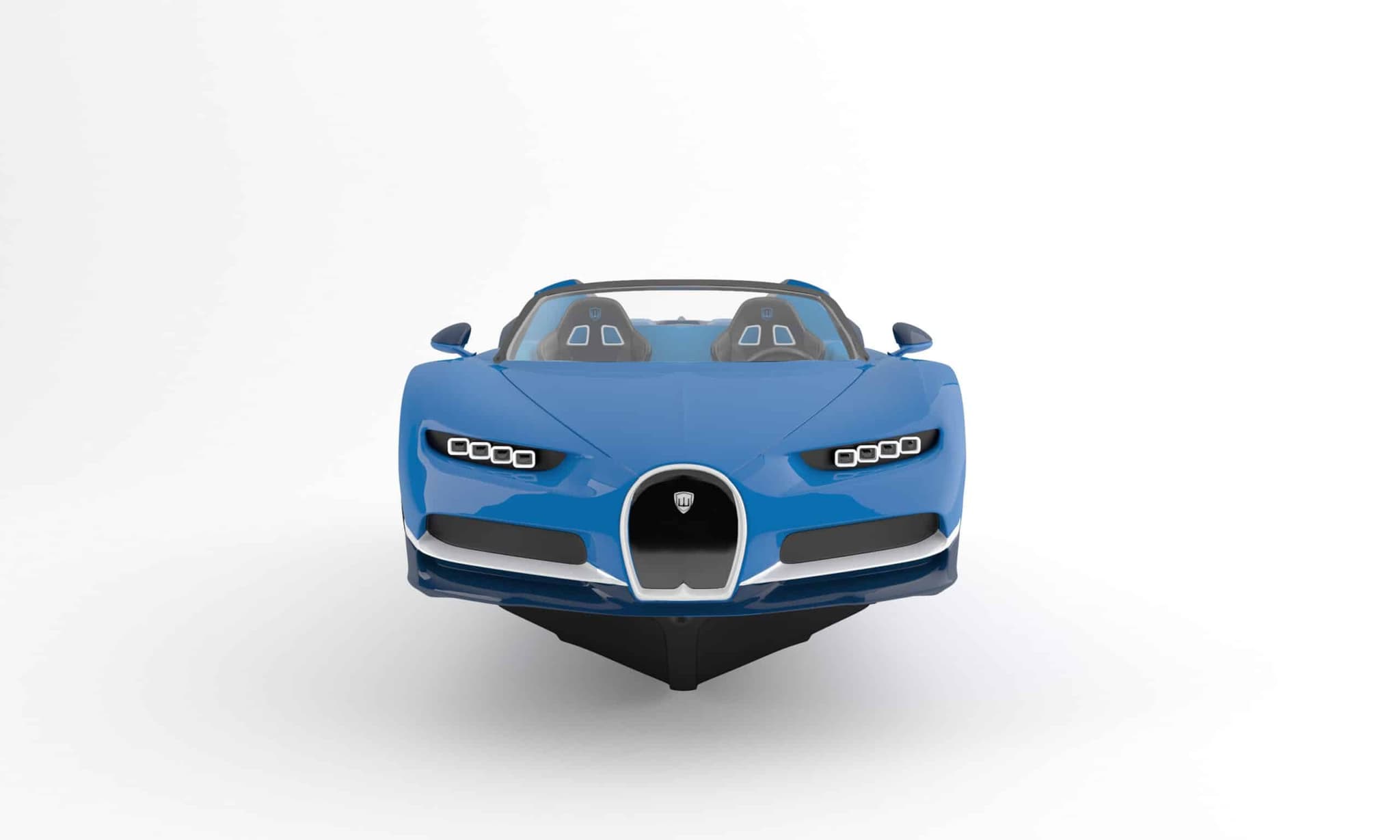 $90,000
WBC Model B
The ultimate expression of performance. When only the absolute best will do, this machine delivers beyond limits.
Keep reading
Related guides that answer the next questions most buyers ask.
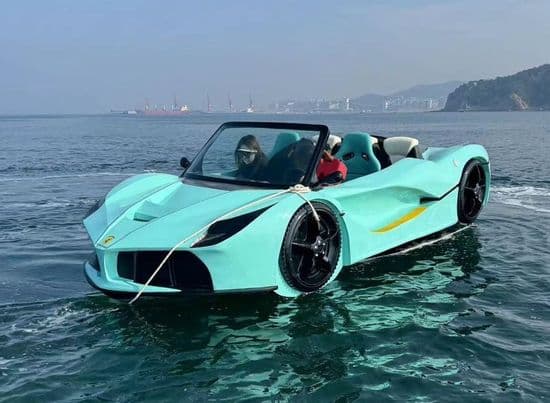
Are Jet Cars Street Legal? | WaterBoatCar
Understand jetcar classification, waterway rules, registration, licensing, and ownership requirements before your first outing.
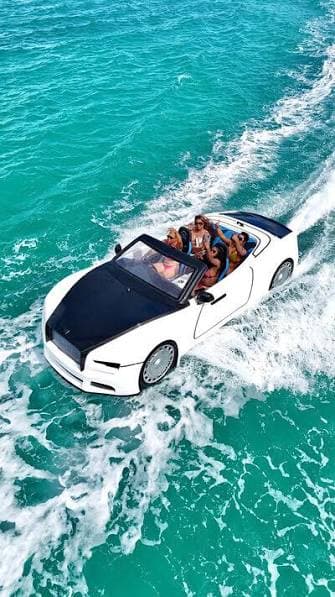
Is It Legal to Own a Jet Car? | WaterBoatCar
Yes, owning a WaterBoatCar jetcar is completely legal — here's the important difference between simply owning one and being licensed to operate it.
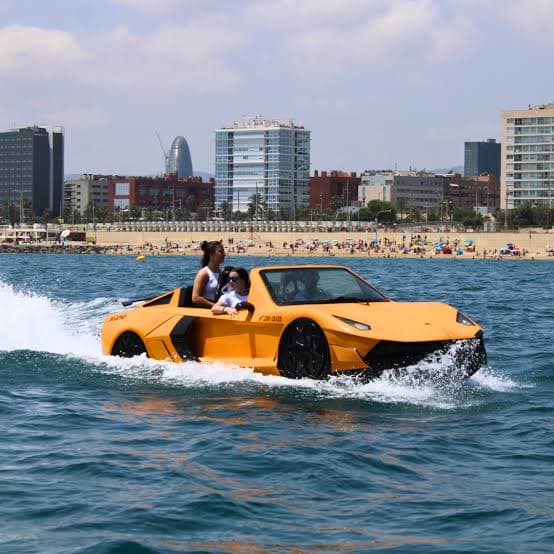
How Do Jet Cars Work? Jet Propulsion Explained
WaterBoatCar jetcars use marine jet propulsion, not propellers — here's how the technology actually moves you across the water.
What Is a Jet Car? | WaterBoatCar
Learn what a jetcar is, how marine jet propulsion works, and why WaterBoatCar combines watercraft performance with supercar-inspired design.
How Safe Are Jet Cars? | WaterBoatCar
WaterBoatCar jetcars are built with marine-grade safety features — from enclosed cabin protection to jet propulsion designed without exposed propellers.
Ready to configure your jetcar?
Choose your model, colours, interior and branding, then submit your build for a confirmed quote and production timeline.