Can Jet Cars Go Underwater? | WaterBoatCar
WaterBoatCar jetcars are surface watercraft, not submersibles — here's how the hull and jet propulsion are engineered for on-water performance.
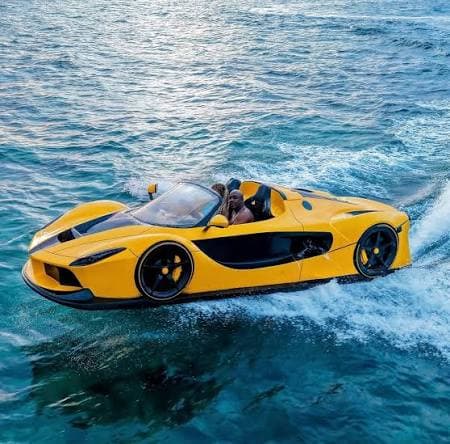
Can jet cars go underwater? No — a WaterBoatCar jetcar is a surface watercraft, engineered to plane across the top of the water at speed rather than to submerge beneath it. It is a question we get often enough that it deserves a proper answer rather than a one-line no, because understanding why explains a great deal about how these vessels are engineered and what they genuinely excel at.
Surface watercraft and submersibles are fundamentally different machines
A submersible or submarine has to solve an entirely different set of engineering problems than a surface watercraft. It needs a pressure-resistant hull that can withstand crushing force at depth. It needs sealed compartments, hatches and often airlock systems. It needs ballast tanks to control buoyancy and manage controlled descent and ascent. It needs life-support and emergency systems designed for occupants who cannot simply step outside. And it needs to be certified against an entirely different regulatory framework.
None of that exists in a WaterBoatCar jetcar, because none of it needs to. Our hulls, seating, electronics and jet intake systems are engineered around one clear goal: high-performance planing on the surface of the water. That is the same fundamental design principle behind every premium powerboat and personal watercraft on the market, and it is where the engineering effort goes.
Surface watercraft vs submersible: a direct comparison
| Engineering factor | WaterBoatCar jetcar (surface watercraft) | True submersible |
|---|---|---|
| Primary design goal | Planing at speed on the surface | Controlled operation below the surface |
| Hull construction | Hydrodynamic planing hull | Pressure-resistant hull rated to depth |
| Buoyancy control | Fixed positive buoyancy | Active ballast system |
| Propulsion | Marine jet propulsion, no exposed propeller | Sealed thrusters or propulsors |
| Occupant environment | Open or enclosed cabin, ambient air | Sealed cabin with life-support systems |
| Typical use | Recreation, cruising, performance boating | Research, military, specialised tourism |
| Price tier | $82,000–$98,000 for our lineup | Dramatically higher, typically many multiples |
| Operator requirement | Boater licence or certificate where required | Specialised training and certification |
Where the confusion comes from: enclosed cabins
Most of the underwater questions we receive trace back to our enclosed-cabin models — particularly the Mercedes G-Class-inspired Model MG, which has a fully enclosed structure with four individual doors. It genuinely does protect passengers from spray, wind and direct sun far more effectively than an open jet ski or bowrider would, and photographs of it can look almost capsule-like.
That is a real comfort and practicality advantage, especially in choppier conditions or on longer outings where nobody wants to arrive soaked. But "protected from surface spray while riding on top of the water" is a completely different engineering challenge from "capable of intentional submersion." The first requires good sealing against splash and weather. The second requires a pressure hull, ballast and life support. We are emphatic about this distinction because we would rather a buyer understand exactly what they are purchasing than assume a capability that does not exist.
What would actually happen if you tried
Attempting to submerge any surface watercraft — ours included — would cause serious damage:
- Water intrusion into the engine. Marine engines draw air; submerging one causes hydrolock and catastrophic internal damage.
- Electronics failure. Navigation, ignition, lighting and instrumentation are sealed against spray, not against sustained pressure.
- Hull and window stress. Glazing and structural joints are engineered for surface loads, not depth pressure.
- Loss of buoyancy control. With no ballast system, there is no controlled way to submerge or resurface.
- Serious risk to occupants. There is no life-support provision and no designed egress path from a submerged cabin.
This is not a limitation unique to WaterBoatCar. It is true of essentially every recreational powerboat, yacht and personal watercraft on the market. The entire category of surface watercraft is built around staying on top of the water.
How the hull actually keeps you on the surface
Understanding why a jetcar stays on top of the water makes the "can it go under" question answer itself. A planing hull is shaped to generate lift as it moves forward: as speed builds, water pressure under the hull pushes the vessel up so it rides on the surface rather than plowing through it. At rest, the vessel floats because it has fixed positive buoyancy — it is designed to displace more than its weight in water and stay up no matter what. There is no mechanism to change that. A submersible, by contrast, carries ballast tanks it can flood with water to become heavier than the water it displaces, then blow clear with compressed air to rise again. A WaterBoatCar jetcar has none of that machinery because its entire purpose is the opposite: to stay reliably, predictably on top.
This is also why a jetcar feels so responsive. Freed from the drag of a fully submerged hull, a planing vessel accelerates quickly and turns sharply, and the jet drive adds thrust directly without a propeller hanging below the waterline. The result is the agile, connected feel that makes the supercar styling more than skin deep.
Rain, spray and rough water: what is actually normal
There is a useful distinction between water on the vessel and water around a submerged one. A WaterBoatCar jetcar is entirely comfortable with the former. Rain, spray thrown up in a turn, and the occasional wave breaking over the bow in chop are all normal parts of powerboating, and the hull, drainage and sealed components are built to shrug them off exactly as any quality powerboat would. That is completely different from deliberate submersion, where the entire vessel and its occupants would be underwater and every system would be operating far outside its design.
If comfort in wet or choppy conditions is a priority for you, that is a genuine reason to look closely at the enclosed Model MG rather than to wish for an underwater capability that no recreational surface craft offers. The enclosed cabin addresses the real-world problem — staying dry and comfortable on the surface — without pretending to solve one that does not apply.
A common buyer question, answered plainly
We regularly hear a version of this from prospective owners: "If the cabin is enclosed, could I take it under just for a moment?" The honest answer is no, and it is worth being direct about why, because the temptation comes from a reasonable place. An enclosed cabin looks sealed, and it is — against spray and weather. But sealing against splash is a world apart from withstanding the pressure, water intrusion and buoyancy problems of going under. Even a brief, shallow submersion would risk engine hydrolock, electronics failure and a genuine hazard to anyone aboard. The enclosed cabin is a comfort feature for surface use, full stop. Understanding that upfront prevents the single most damaging mistake an owner could make with any surface watercraft.
What our models genuinely excel at
Where a WaterBoatCar jetcar shines is exactly what it is engineered for: fast, agile, head-turning performance on the surface, married to a design language borrowed from some of the most iconic supercars in the world.
- Marine jet propulsion with no exposed propeller, which is a meaningful safety advantage around swimmers and shallow water.
- Shallow-draft capability, because a jet drive does not need propeller clearance beneath the hull.
- Responsive handling with tight turning and rapid acceleration, covered in more detail in our guide to how fast jet cars go.
- Genuine presence. These vessels are designed to be looked at, and they are.
- Configurable comfort, from open layouts to the fully enclosed Model MG cabin.
If you want the full technical framing of what the category actually is, what is a jet car anyway is the right starting point, and the difference between jet cars and regular cars covers why the supercar styling does not make it a road vehicle.
Pros and cons of a surface jetcar versus a submersible
Pros of a surface jetcar
- Immediately usable. Launch, operate and recover it the way you would any powerboat, with no specialised training beyond standard boating requirements.
- Vastly lower cost. Our lineup runs $82,000 to $98,000; pressure-hull submersibles occupy a completely different price tier.
- Real speed and agility. Planing hulls and jet propulsion deliver performance that submersibles simply are not built for.
- Practical storage and transport. Trailerable, storable and serviceable through normal marine channels, as covered in where you should keep your jet car.
- Social and usable. Four to six passengers, open water, visible design. Submersibles are typically two-person, enclosed and utilitarian.
- Straightforward servicing. Marine engine specialists can support it; submersible systems require niche expertise.
Cons of a surface jetcar
- No underwater capability at all. If submersion is genuinely what you want, this is the wrong product.
- Weather-dependent comfort. Rough water affects a surface vessel far more than a submerged one.
- Spray exposure on open models. The four non-enclosed models are closer to a traditional jet-boat layout.
- Surface traffic and rules. You share the surface with other vessels and are subject to local boating regulation.
- Salt exposure needs management. Rinsing and maintenance matter, as explained in can jet cars go in salt water.
Why we are so direct about this
It would be easy to leave the underwater question vague and let the striking, capsule-like look of the enclosed models do the selling. We deliberately do not, because the gap between what a buyer imagines and what a vessel actually does is the fastest route to disappointment — and at this level, disappointment is expensive. A WaterBoatCar jetcar is an exceptional surface watercraft, and it is honest about being exactly that. Setting the expectation correctly before purchase is how we make sure every owner is thrilled with what arrives, rather than let down by a capability that was never part of the design. That same honesty runs through our other guides, from how safe jet cars are to the practical realities of salt-water operation.
If underwater exploration is genuinely what you want
If what you are actually picturing is an underwater exploration experience, that is a different product category entirely. True submersibles and semi-submersible tourist vessels do exist, but they come from different manufacturers, sit under different regulatory requirements, demand specialised operator training, and cost dramatically more. We say this plainly rather than letting the ambiguity sell a vessel, because a mismatch between expectation and reality is the worst possible outcome for a purchase at this level.
Choosing between our models
If spray protection and weather comfort are what drew you to the underwater question in the first place, the enclosed Model MG at $98,000 is the model built specifically for that, with four doors and a fully enclosed cabin for up to six. The Rolls-Royce-inspired Model RR at $84,000 also carries six and prioritises refinement over raw aggression. If you want the most open, most driver-focused experience, the Lamborghini-inspired Model LA and Ferrari-inspired Model FLF start at $82,000 and lean toward performance. The Bugatti-inspired Model B at $90,000 sits between the two philosophies.
Final thoughts
A WaterBoatCar jetcar is, and is designed to be, a surface watercraft — a striking, high-performance vessel for the open water, not a submersible. Understanding that distinction upfront means you will know exactly what you are buying and get exactly the experience it is built to deliver: supercar presence, marine jet propulsion and genuine performance on top of the water.
That surface is where all the drama happens anyway. The combination of a supercar body at speed on open water — spray off the hull, jet thrust answering immediately to throttle, the full visual spectacle from the dock — is precisely the experience these vessels are engineered to create. No submersible has ever looked or felt like this on the surface, and that is exactly the point.
Frequently Asked Questions
Is any WaterBoatCar model waterproof enough to handle heavy rain or rough water?
The vessels are built to handle spray, rain and reasonably rough conditions the way any quality powerboat would, but handling wet weather on the surface is different from being submersible — always check local conditions and your own experience level before heading out in rough water.
Do the enclosed-cabin models have any watertight sealing at all?
The enclosed cabin on models like the Model MG is designed to keep spray and wind out during normal surface operation — it is not rated or designed for underwater use.
Are there any WaterBoatCar models planned that could go underwater in the future?
Our current lineup is entirely surface watercraft; if that changes, we would communicate it clearly as a distinct new product category rather than an upgrade to the existing jetcar line.
What's the difference between a jetcar and a real submarine, cost-wise?
True submersibles are generally significantly more expensive than luxury surface watercraft due to the pressure-hull engineering and specialised systems required — a different investment tier and purpose entirely.
Can I still get spray protection without the enclosed Model MG?
The other four models are more open in design, closer to a traditional jet-boat layout; if spray protection is a priority for you, the Model MG's enclosed cabin is the one built specifically to address that.
Would submerging a jetcar void the warranty?
Operating any surface watercraft outside its designed use, including intentional submersion, is not covered use and would be expected to cause damage that falls outside normal warranty terms.
Can a jetcar handle waves breaking over the bow?
Occasional spray and water over the bow is normal for any powerboat in choppy conditions and the hull is designed for it — sustained or deliberate submersion is not.
Explore the models
Every WaterBoatCar jetcar is hand-finished to order. Tap a model to see specifications, gallery and pricing.
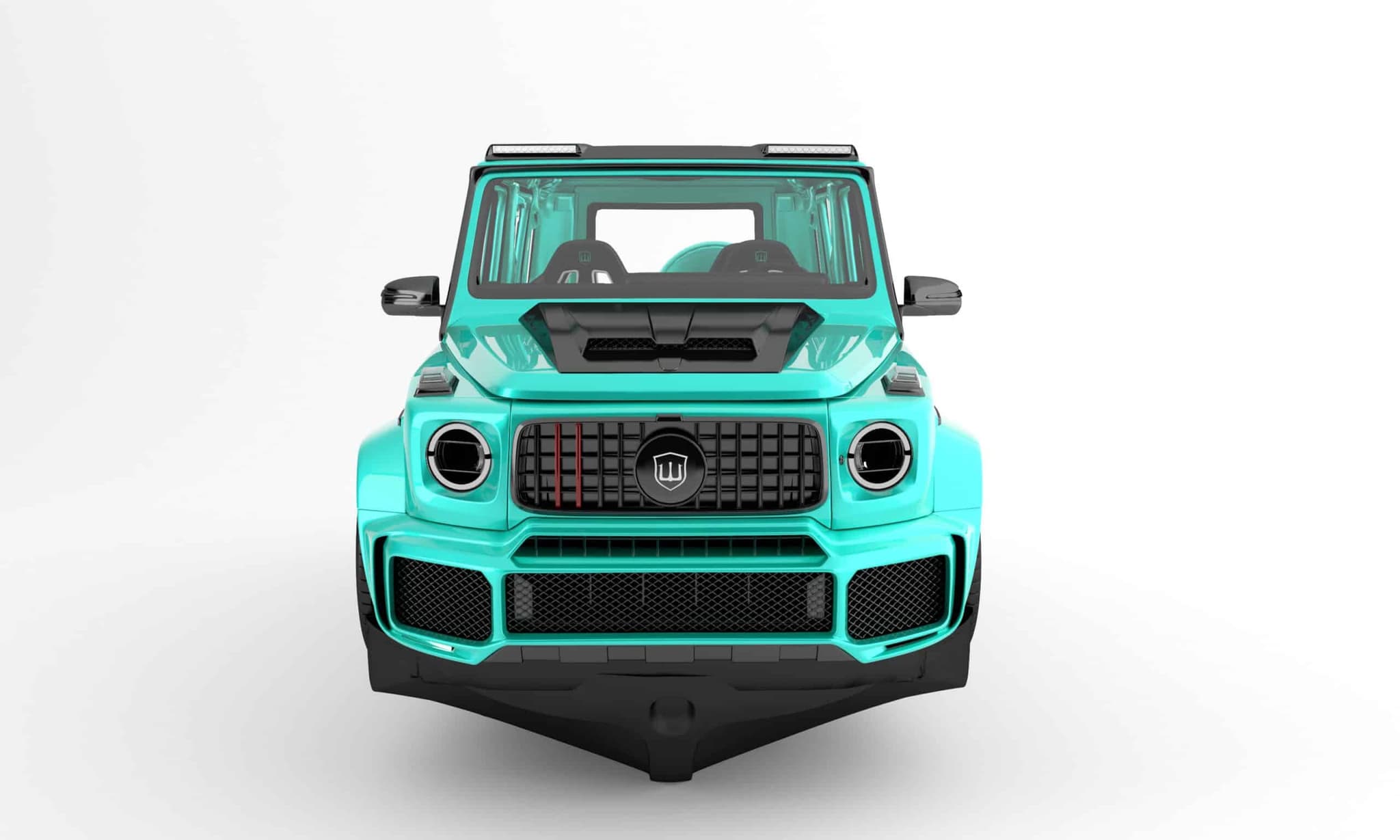 $98,000
WBC Model MG
The definitive off-road legend now commands the open sea. Engineered for performance, designed for presence, and crafted to carry up to six in uncompromising luxury.
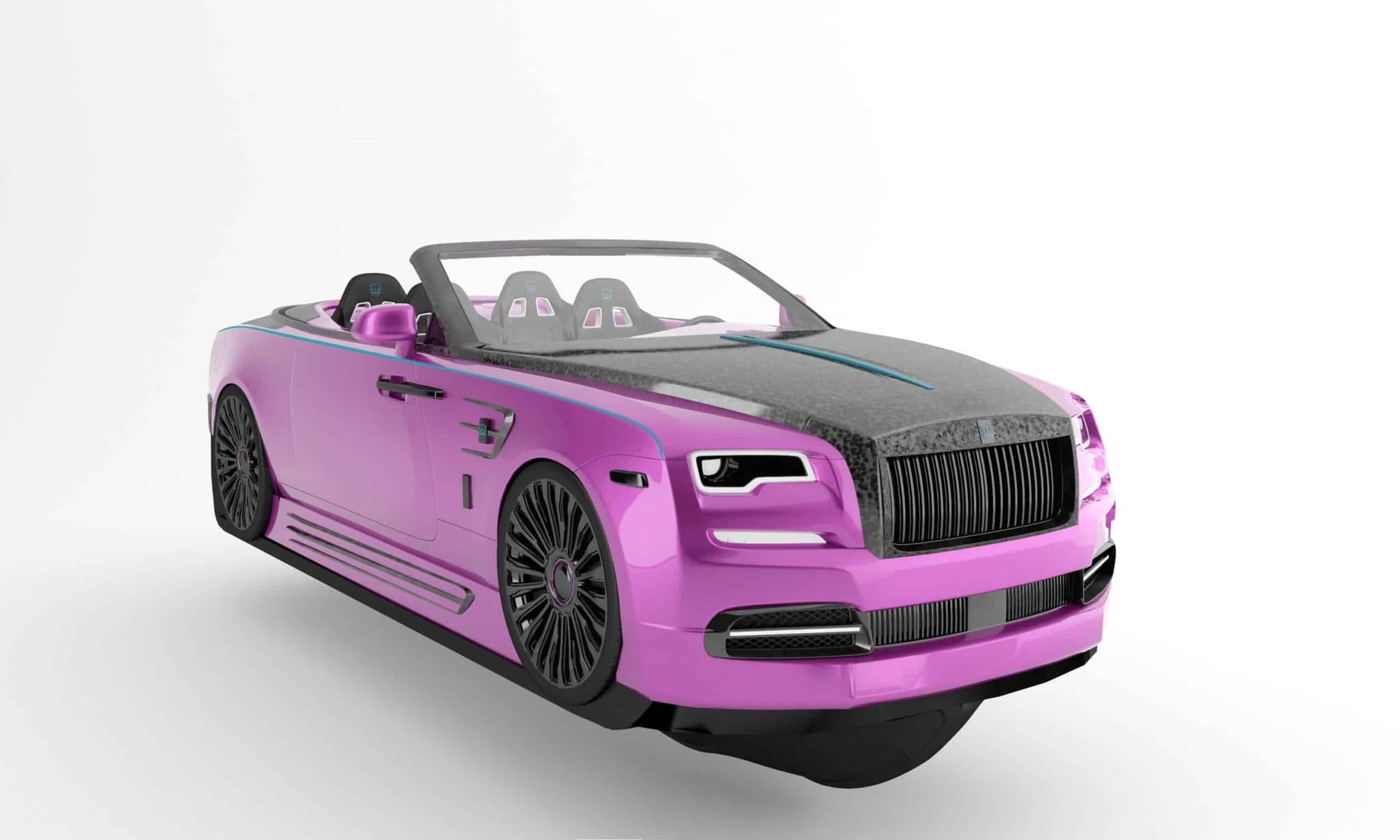 $84,000
WBC Model RR
Crafted for those who refuse to arrive unnoticed. A presence worthy of royalty. A statement beyond status.
 $82,000
WBC Model LA
The pinnacle of super sports performance — now reborn on water. Where Italian passion fuels pure speed.
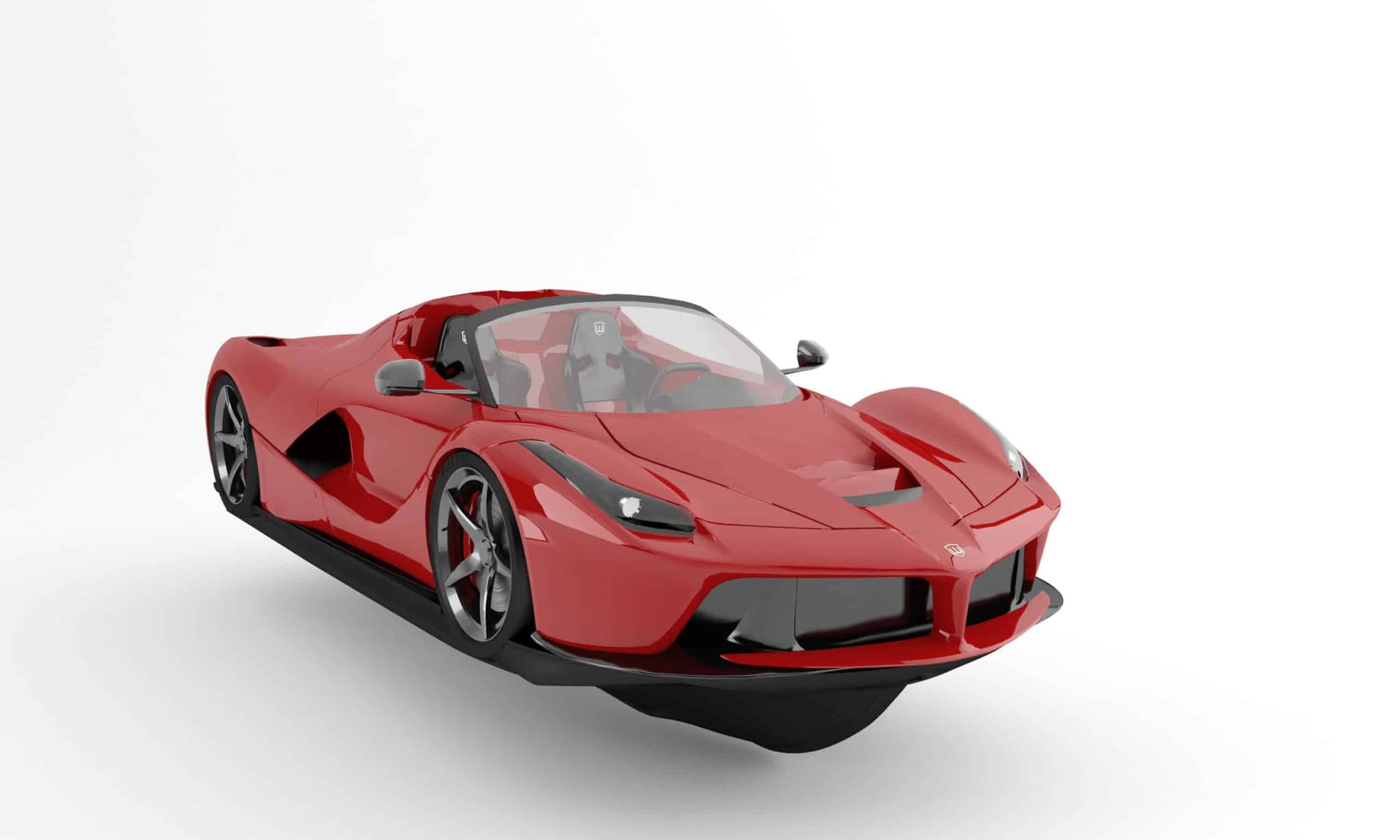 $82,000
WBC Model FLF
Unmatched speed. Now unleashed on water. Driven by Italian passion, engineered for pure performance.
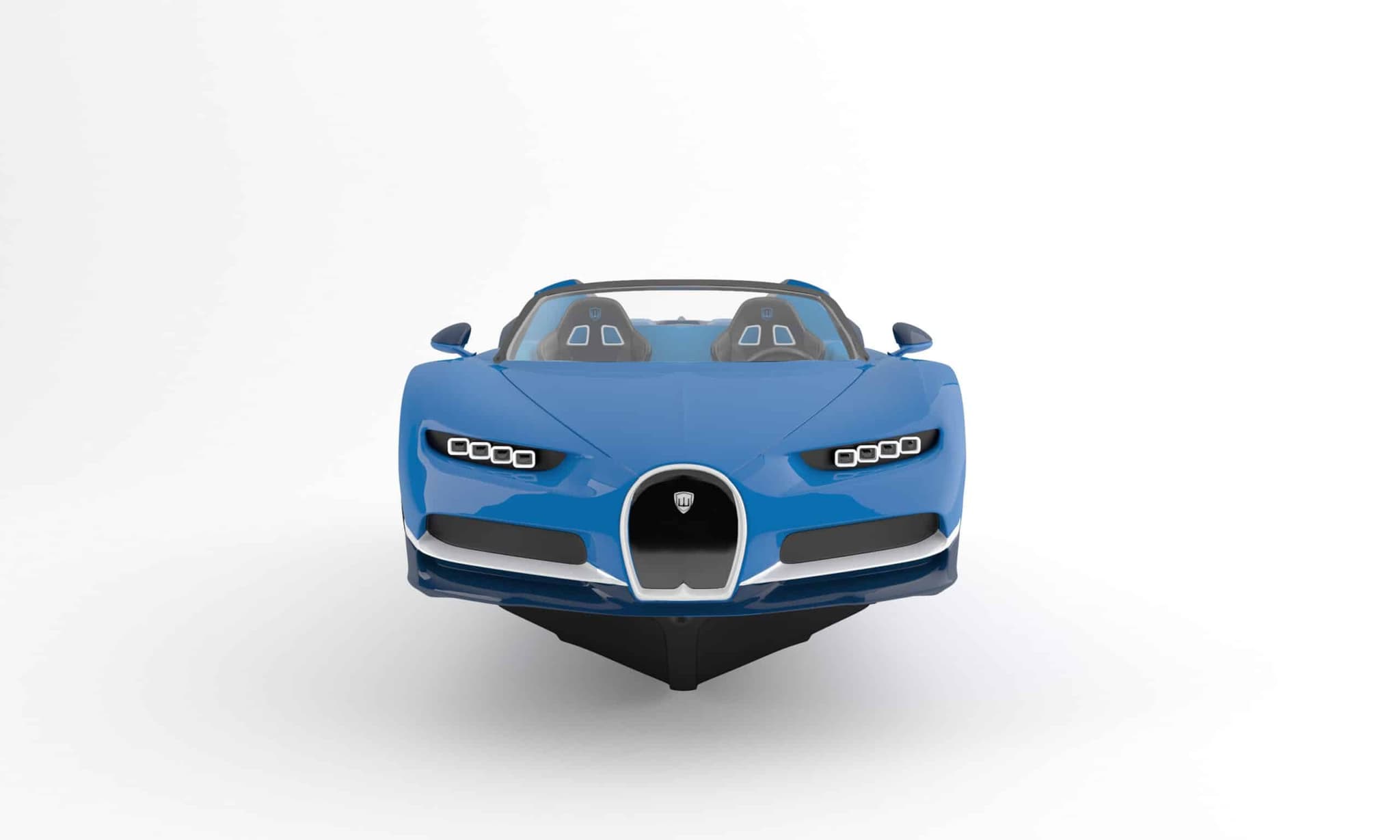 $90,000
WBC Model B
The ultimate expression of performance. When only the absolute best will do, this machine delivers beyond limits.
Keep reading
Related guides that answer the next questions most buyers ask.
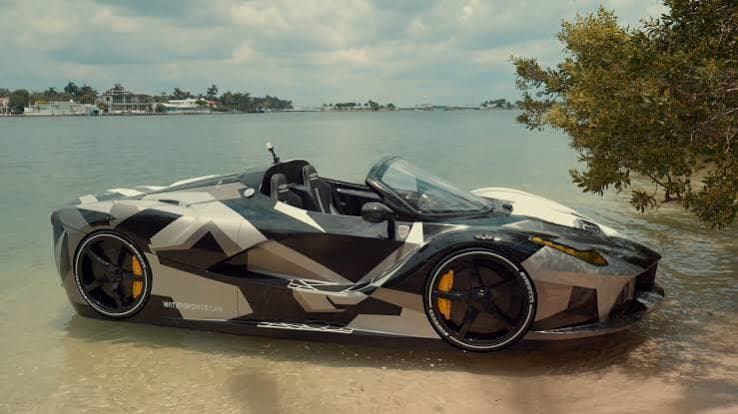
How Safe Are Jet Cars? | WaterBoatCar
WaterBoatCar jetcars are built with marine-grade safety features — from enclosed cabin protection to jet propulsion designed without exposed propellers.
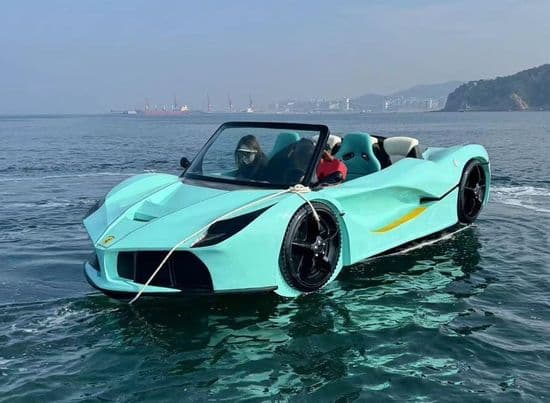
What Is a Jet Car? | WaterBoatCar
Learn what a jetcar is, how marine jet propulsion works, and why WaterBoatCar combines watercraft performance with supercar-inspired design.
What's the Difference Between a Jet Car and a Regular Car?
A WaterBoatCar jetcar looks like a supercar but functions as a watercraft — here's exactly how it differs from a real car.
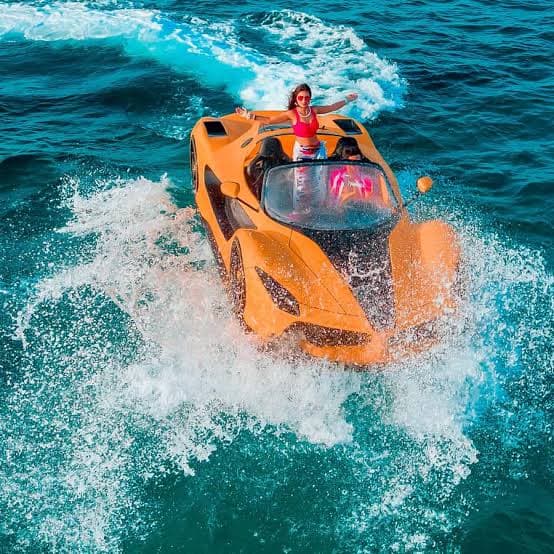
Can Jet Cars Go in Salt Water? Coastal Operation Guide
Learn how WaterBoatCar jetcars handle salt water, coastal boating, corrosion prevention, rinsing, and routine maintenance after use.
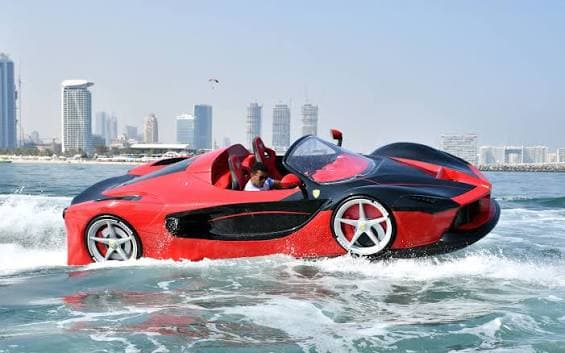
Do Jet Cars Have Brakes? How Stopping Works on Water
WaterBoatCar jetcars don't use traditional brakes — here's how jet-propelled watercraft actually slow down and stop on the water.
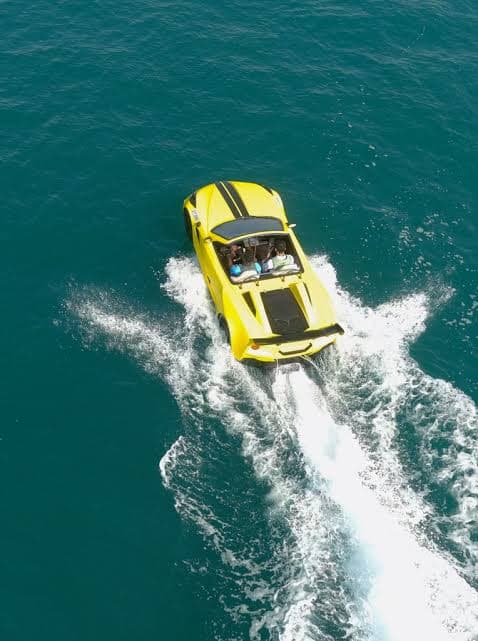
How Fast Do Jet Cars Go? Top Speed by Model
WaterBoatCar jetcars deliver supercar-level performance on water — here's what top speed looks like for each model and what factors determine it.
Ready to configure your jetcar?
Choose your model, colours, interior and branding, then submit your build for a confirmed quote and production timeline.